
Cracked Tile Repair in Macon, GA: When to Regrout vs Replace
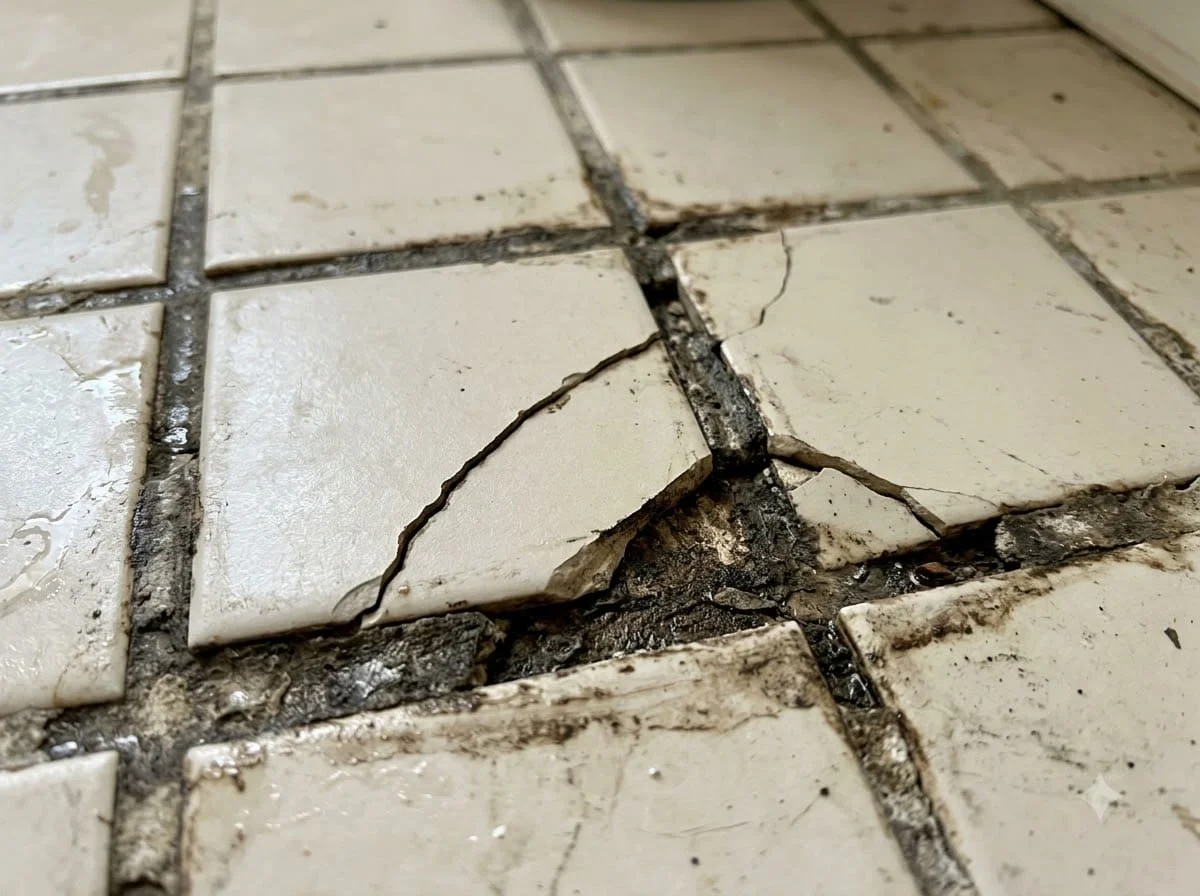
Regrout when only the grout has failed and the tile is still solid. Replace when the tile itself is cracked, when tiles sound hollow underfoot, or when cracks run in a straight line across several tiles — because all three of those mean the problem is under the tile, not in the joint between them.
That single distinction decides everything about the repair, including whether a $400 job or a $2,500 job is the honest answer. This guide explains how to tell which one you have, why Central Georgia produces so much of it, and what each fix costs in Macon in 2026.
Tile is unusual among finish materials because it is completely rigid. Hardwood flexes, vinyl flexes, carpet does not care. Tile does none of that, so it functions as an honest reporter of whatever the floor beneath it is doing. When Handyman Macon GA gets called about cracked tile, the tile is usually the symptom and the substrate is the story.
How to Tell Whether to Regrout or Replace
Telling regrout from replace takes about two minutes and no tools. Work through these in order.
First, tap the tiles. Tap across the area with a knuckle or the handle of a screwdriver. Solid tile returns a sharp, dense sound. Debonded tile returns a hollow, drummy sound because there is now an air gap between the tile and what it was bonded to. Hollow tile has to come up, regardless of how good the grout looks.
Second, look at the crack pattern. A single cracked tile with a chip near the center usually means something heavy was dropped, and that is a one-tile replacement. A crack running dead straight across several tiles in a line is structural — it is tracing a joint, a seam, or a flex point in the subfloor below.
Third, check where the grout is failing. Grout crumbling out of joints across an entire floor is age and wear, and regrouting is appropriate. Grout cracking only at the corners and along the tub or wall line is not a grout failure at all — those junctions should have been caulked rather than grouted.
Fourth, press on the floor. Stand on the tile near the crack and shift your weight. Any perceptible movement, flex, or click means the subfloor is deflecting, and no tile repair will hold until that is corrected.
If all four checks come back clean and the tile is simply dingy or the joints are worn, you are looking at grout cleaning or regrouting, which is the cheapest and most satisfying outcome available here.
Why Tile Cracks in Macon Homes
Tile cracks in Macon homes for reasons that trace back to soil more often than to workmanship. Bibb County sits on red clay that expands when it takes on water and contracts as it dries, and Central Georgia delivers roughly 45 to 50 inches of rain a year against long dry summer stretches. That is a soil that never stops moving.
How that movement reaches your tile depends on what your house sits on. Homes on brick pier foundations — the standard in Vineville, Huguenin Heights, and Macon's older neighborhoods — transmit it as differential settlement, where one part of the floor system moves relative to another. Slab homes transmit it as slab cracking, and a crack in a slab will telegraph straight up through the tile bonded to it within a few seasons.
Neither is necessarily an emergency. Both explain why tile in this area cracks along lines rather than at random.
Inadequate subfloor is the second cause, and it is the one that is genuinely someone's fault. Tile over a wood subfloor needs stiffness — the industry standard for ceramic tile allows deflection of no more than the span divided by 360 — plus a proper underlayment such as cement board or an uncoupling membrane. Tile laid directly over a single layer of plywood, or over old vinyl, will crack. We find this regularly in bathrooms and kitchens that were retiled by a previous owner on a budget.
Humidity and water intrusion are the third. Central Georgia's humidity keeps wet areas from drying out fully between uses, and long-term moisture behind tile degrades the substrate until it can no longer support the bond. This is the mechanism that turns a hairline shower crack into a wall that has to be opened, and it is closely related to what we describe in our guide to water damage drywall repair.
Impact is the fourth and simplest. A dropped cast-iron pan cracks a tile. That is a one-tile repair and nothing more, and it is the only cause on this list that carries no further implication.
What Cracked Tile Repair Costs in Macon
| Repair | Typical Cost |
|---|---|
| Replace 1–4 individual tiles | $150 – $400 |
| Regrout a bathroom floor | $300 – $700 |
| Regrout a shower surround | $500 – $1,200 |
| Recaulk changes of plane (corners, tub line) | $150 – $350 |
| Professional grout cleaning + seal | $250 – $600 |
| Repair substrate + reset tile (small area) | $400 – $900 |
| Full bathroom floor tile replacement | $1,200 – $3,000 |
| Full shower tile replacement | $3,000 – $7,000 |
Small tile repairs price higher per unit than people expect, and the reason is that almost none of the cost is the tile. A four-tile replacement involves protecting the area, removing grout without damaging neighbors, breaking out tile cleanly, scraping the old bed flat, setting, curing, and grouting — plus a second trip in many cases because thinset needs to cure before grouting. The tile itself might be $12.
How a Tile Repair Is Actually Done
A proper tile repair follows the same sequence every time. First, the grout around the damaged tile is cut out with a grout saw or oscillating tool, so that removal does not chip the surrounding tiles. Second, the damaged tile is scored and broken out from the center toward the edges, which releases it without prying against its neighbors.
Third, the old thinset bed is scraped down to a flat, sound surface — this is the step most commonly skipped, and skipping it leaves the replacement tile sitting proud of the field. Fourth, the substrate is inspected, because the tile is off and this is the only chance to see whether the problem was underneath. Fifth, new thinset is combed on and the tile is set to the plane of the surrounding field and left to cure. Finally, the joints are grouted, and any change of plane at a wall or corner is caulked rather than grouted.
Where the substrate turns out to be the problem, the honest version of this job stops at step four and becomes a different conversation. Setting a new tile onto a flexing subfloor produces a cracked tile again, usually within a year, and doing it anyway is how a homeowner ends up paying twice.
The Grout vs Caulk Rule Nobody Is Told
Grout belongs between tiles on the same plane. Caulk belongs anywhere the plane changes. That means the joint where a floor meets a wall, the line where a shower wall meets the pan or tub, and every inside corner of a shower should be flexible caulk — not grout.
Those junctions move. A house expands and contracts seasonally, and two surfaces meeting at ninety degrees move relative to each other. Grout is rigid cementitious material with essentially no ability to flex, so it cracks and falls out. Caulk is designed to absorb exactly that movement.
This one rule explains the single most common tile complaint we hear in Macon: grout that has been repaired three times and keeps cracking in the same corner. It was never a repair problem. It was the wrong material in a moving joint, and replacing it with caulk ends the cycle permanently.
DIY vs Calling a Pro
Regrouting a floor is a reasonable DIY project. It is slow, unglamorous work — removing old grout with an oscillating tool takes far longer than people budget for — but the risk of doing damage is low and the materials are inexpensive. Recaulking a tub line is similarly approachable and is probably the highest-value hour a homeowner can spend in a bathroom.
Replacing tile is where DIY gets expensive. Breaking out one tile without cracking the three around it takes technique, matching a discontinued tile takes sourcing, and setting a replacement level with the existing field is genuinely difficult on the first attempt. A tile set slightly proud catches every bare foot and mop in the house for the next decade.
Anything involving a shower should go to a professional, because the waterproofing layer behind the tile is not visible and not forgiving. A shower repair that compromises that layer produces a leak that does not appear until the substrate is already gone.
Get a Tile Repair Estimate in Macon
An accurate answer on tile requires seeing and tapping the floor, because the only question that matters — whether the substrate moved — cannot be answered from a photograph. Call (877) 368-1249 or use the contact form to schedule a free estimate. We will tap the field, check for deflection, tell you plainly whether this is a regrout or a replacement, and put it in writing before anything starts.
Our tile and grout repair service in Macon covers floors, showers, backsplashes, and substrate correction across Bibb County. If the underlying issue turns out to be a flexing floor, that overlaps with the same causes behind squeaky floors in Macon homes. Houston County homeowners can find the same service on our tile and grout repair in Warner Robins page.
Frequently Asked Questions
- Regrout when the tile is sound and only the grout failed. Replace when the tile itself is cracked, tiles sound hollow underfoot, or several cracks run in a straight line. Grout is a filler, not an adhesive, so regrouting over a moving or debonded substrate produces the same cracks within a year. The test is whether tile is loose — loose tile means the problem is underneath it.
- Substrate movement causes most of it. Central Georgia sits on red clay that expands when wet and contracts when dry, and both pier foundations and slabs transmit that seasonal movement into the floor above. Tile is rigid and does not tolerate deflection, so a floor that flexes even slightly cracks tile or shears the bond beneath it. Impact damage and tile over an inadequate subfloor account for most of the rest.
- Replacing a few individual tiles runs $150–$400, mostly setup and matching rather than material. Regrouting a bathroom floor runs $300–$700 and a shower surround $500–$1,200. Recaulking changes of plane runs $150–$350. A full tile floor replacement in a typical Macon bathroom runs $1,200–$3,000 including demolition and substrate correction.
- Often, depending on what was installed. The first place to check is your own garage or attic — installers routinely leave a box behind. Failing that, we look for a discontinued match through supplier stock, or pull tile from a hidden spot such as inside a closet or behind a toilet, use those for the visible repair, and fill the hidden location with the closest available substitute.
- Because grout does not belong there. Any change of plane — floor to wall, shower wall to pan, or an inside corner — is a movement joint and needs flexible caulk, not rigid grout. Those junctions move seasonally as the structure expands and contracts, and grout cannot flex. Repeated cracking in exactly the same corner almost always means caulk was the right material from the start.
- More urgent than cracked grout on a floor, because a shower has water against it daily. Grout is not waterproof — the waterproofing layer sits behind the tile — but cracked grout speeds how fast water reaches that layer and finds any weakness. In Macon's humidity, a shower leaking slowly behind tile produces soft substrate and mold well before anything shows on the surface. Address it within weeks, not seasons.