
The Most Trusted Handyman in Huguenin Heights, Macon — Craftsman Bungalow Specialists.
Handyman services in Huguenin Heights, Macon GA start at $85 per hour, and most homes in this neighborhood are Craftsman-era bungalows built between roughly 1910 and 1930. Handyman Macon GA repairs the details that define them — tapered porch columns on masonry piers, exposed rafter tails, knee braces, and wide fascia — and has done so since 2010.
A bungalow wears its structure on the outside. On a mid-century ranch a bad repair hides behind brick, but on these houses the porch, the eave, and the column are the architecture. Get the profile wrong and the whole front of the house reads wrong from the sidewalk.
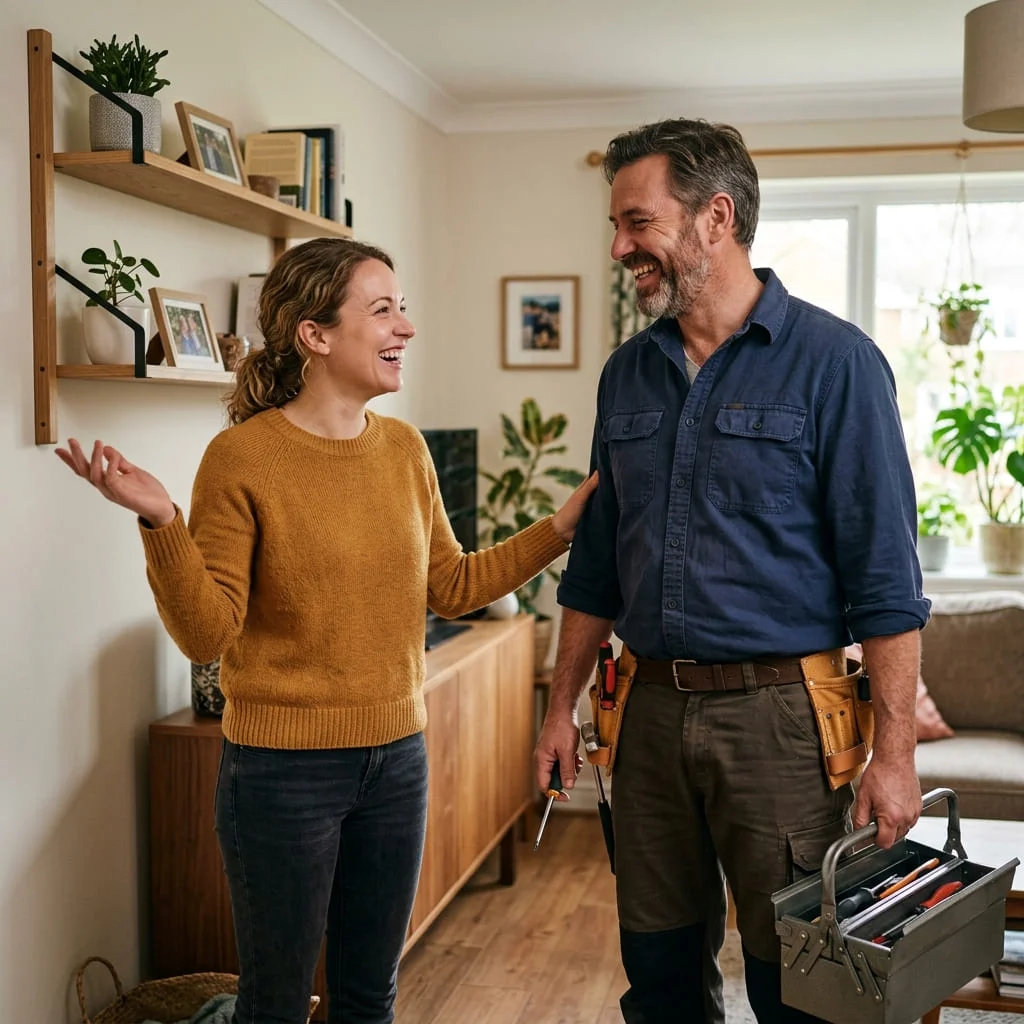
Bungalow work done to the original profile, not the nearest stock substitute.
Every service below is available throughout Huguenin Heights, handled by the same licensed crew that has worked on Macon's early-1900s housing stock since 2010. Owner-occupied and rental properties alike.
Front Porch Repair
Sagging beams, settled piers, rotted decking, and tapered column rebuilds on the deep porches these homes are built around.
Learn more →Rafter Tails & Knee Braces
Replicating exposed eave details from a sound original when the weathered ones finally give out.
Learn more →Trim & Millwork
Wide fascia, window casing, and interior profiles milled to match rather than approximated.
Learn more →Plaster & Drywall Repair
Re-keying loose plaster to the lath and skim-coating flat, instead of a patch that cracks again by spring.
Learn more →Exterior Painting
Proper prep on aged wood, careful handling of pre-1978 coatings, and clean lines on heavy Craftsman detail.
Learn more →Sash Window Repair
Broken cords, painted-shut sashes, failed glazing putty, and rotted sills on original double-hung units.
Learn more →Electrical Services
Grounded circuits, panel work, and sorting out the wiring in homes that were split into two units decades ago.
Learn more →Plumbing
Leak repair and fixture work on galvanized and cast-iron systems, including shared lines in converted units.
Learn more →Heart Pine Floor Repair
Squeaks, gaps, and board replacement matched to original heart pine milling width and thickness.
Learn more →Door Repair & Alignment
Doors racked out of square by seasonal pier movement, plus original hardware restored rather than discarded.
Learn more →Gutter Repair
Keeping water off exposed rafter tails and out of the porch structure, which is where bungalow rot begins.
Learn more →Insulation & Draft Sealing
Attic depth and draft sealing on homes built before insulation was standard practice anywhere.
Learn more →A bungalow fails from the porch inward.
Craftsman bungalows in Huguenin Heights share an anatomy, and knowing it tells you where to look. The porch roof is carried by tapered columns. Those columns sit on masonry piers, not on the porch deck. The main roof extends past the wall in a deep overhang supported by exposed rafter tails, with decorative knee braces under the eave. The house itself sits on brick piers over a vented crawl space, and the floors are heart pine over joists.
Every failure mode on these houses follows that chain. Water gets past a gutter and reaches the rafter tails. A pier loses mortar and the porch beam drops. Grade builds up against a column base and the bottom eight inches go soft. Fix the visible piece without following the chain back and the repair fails on the same schedule as the original.
- 01
We repair the pier before the column.
A new column set on a failing pier settles exactly like the old one did. The masonry underneath comes first, every time.
- 02
We replicate profiles from an original.
Rafter tails, knee braces, and column wraps get copied off a sound example on the same house — not substituted with stock trim.
- 03
Written estimate before we start.
Porch and eave work uncovers things. We flag the likely discoveries in the estimate so they are not a conversation about the invoice.
- 04
One-year workmanship warranty.
If anything we did is not right within a year, we come back and fix it at no charge — in Huguenin Heights and across Bibb County.
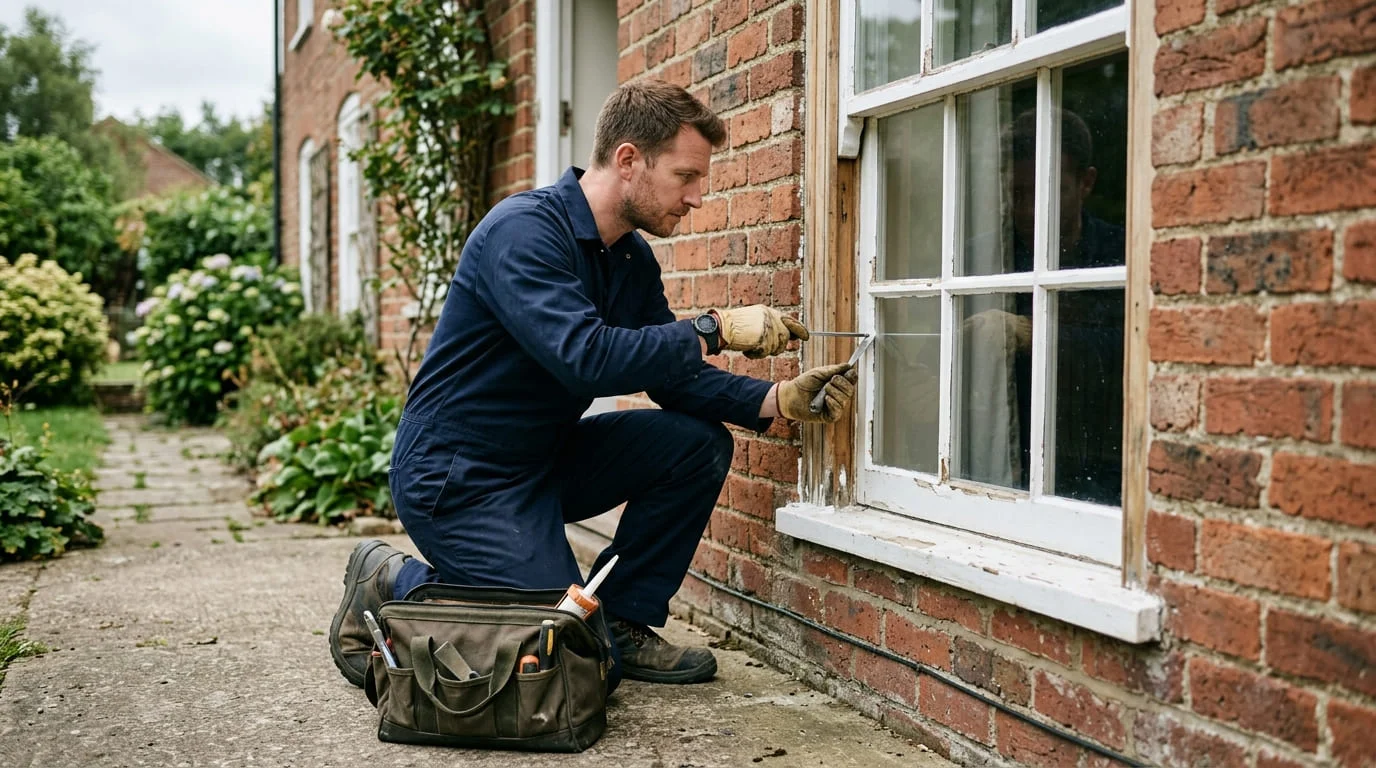
Why Huguenin Heights Homes Develop the Problems They Do
Huguenin Heights homes develop problems that trace to three specific conditions: rolling terrain, a century of exposure on exterior woodwork, and decades of conversion from single-family houses into rental units.
The terrain comes first because it drives everything structural. Unlike the flatter blocks of Macon, much of this neighborhood sits on slope. A bungalow on a graded lot has piers at meaningfully different depths from the front of the house to the back, and Central Georgia's red clay swells and shrinks with moisture through the year. The downhill side of a house moves more than the uphill side, and that differential is what racks door frames, opens seasonal cracks over the same doorway, and puts a slope in a hallway floor over forty years.
Exposure is the second condition, and it is the one unique to this style of house. A ranch home hides its structure behind brick veneer. A Craftsman bungalow puts its structure outdoors on purpose — rafter tails, brackets, beam ends, and column bases are all exposed wood, sitting in a climate that delivers roughly 45 to 50 inches of rain a year and long humid summers. Those details were built from old-growth lumber that has lasted a hundred years, and they are now at the point where the paint film is the only thing standing between them and the weather.
Conversion is the third. Many Huguenin Heights bungalows were divided into duplexes and rental units over the decades, and those conversions were rarely done as full separations. Two kitchens can run off one original supply line. Two units can share a single panel and a single water heater. A second bathroom may have been added by branching off a drain that was never sized for it.
None of that is dangerous by itself, but it explains problems that make no sense otherwise — why water pressure drops in one unit when the other runs a shower, or why a breaker in a hallway closet controls outlets in a room the tenant cannot access.
A note on historic district review
Huguenin Heights is recognized among Macon's historic residential neighborhoods, and National Register listing on its own does not restrict what an owner does with private funds. Local design review is a separate designation administered by the Macon-Bibb County Planning & Zoning Commission, and exterior alterations inside a locally designated district can require a Certificate of Appropriateness.
The practical advice is the same one we give in Vineville: before changing anything visible from the street — columns, porch details, windows, siding, roofing — confirm your specific address with Macon-Bibb Planning & Zoning. Interior work is generally unaffected. We will tell you when a job looks like it needs that check.
What Huguenin Heights Homeowners Are Saying
Owners and landlords in the neighborhood who called once and kept the number.
"Our porch had dropped almost two inches on one end and two people had quoted us on replacing the columns. Handyman Macon GA looked at the pier under it first and showed me the mortar was gone. They rebuilt the pier, jacked the beam back level, and reused the original column."
"Four rafter tails on the side of our 1922 bungalow had rotted at the ends. They copied the profile off a good one on the back of the house so the new ones match exactly. You genuinely cannot tell which four are new, and that was the whole point."
"I own two duplexes in the neighborhood and turnover repairs used to mean calling three different people. They handle the whole punch list in one visit and send one invoice per property. That alone has saved me more than the work costs."
Porch, eave, or column problem in Huguenin Heights? We repair to the original.
The Heights and the historic blocks around it.
We cover all of Huguenin Heights — the bungalow blocks on the slope, the streets running toward Napier Avenue, and the connections east toward downtown Macon and north into the Vineville corridor.
The neighborhood is close to our Macon base, which makes it one of the quicker areas for us to reach when something needs attention the same day.
Also serving Warner Robins, Lizella, and all of Central Georgia. See all 70+ services →
Call (877) 368-1249Common Questions from Huguenin Heights Homeowners
Have a question not listed here? Call us at (877) 368-1249 and we will answer it directly.
- A sagging Craftsman porch almost always starts at the bottom. Tapered columns here sit on masonry piers that carry the porch roof load to grade. When mortar deteriorates or the grade holds water against the pier, the pier settles and the beam follows it down. Replacing the column without repairing the pier means the new column settles too. We repair the pier and re-level the beam first.
- Yes, and on these homes it matters more than most. Exposed rafter tails, knee braces, wide fascia, and tapered column wraps are not sold as stock lumber today. We replicate the profile from a sound original on the same house rather than substituting the nearest modern trim, because a mismatched rafter tail is visible from the street on a house whose design language is its exterior woodwork.
- Yes. Many Huguenin Heights bungalows were split into duplexes and rentals over the decades, and those conversions have their own maintenance profile — shared supply lines, one panel between two units, a single water heater serving two kitchens. We handle turnover work and between-tenant punch lists, with a written scope and one invoice per property.
- Most handyman work in Macon runs $85–$125 per hour with a typical half-day minimum. Bungalow exterior work here often prices at the upper end because detailing has to be replicated rather than bought, and porch and eave repairs frequently require staging on sloped lots. Interior work prices in line with the rest of Macon. Free written estimate before starting.
- Huguenin Heights is recognized among Macon's historic residential areas, and National Register listing alone does not restrict private work. Local design review is a separate designation handled by the Macon-Bibb County Planning & Zoning Commission, and exterior changes in a locally designated district can require a Certificate of Appropriateness. Confirm your specific address before changing anything street-facing.
- Sloped lots and pier foundations combine to cause it. Much of this neighborhood sits on rolling terrain, so piers sit at different depths across the footprint and drain unevenly. Central Georgia clay swells and shrinks with moisture, so the downhill side moves more than the uphill side through the year. That differential racks the door frames, which is why a door closes fine in winter and binds by midsummer.