
Squeaky Floors in Your Macon GA Home: Causes, Fixes, and When to Call
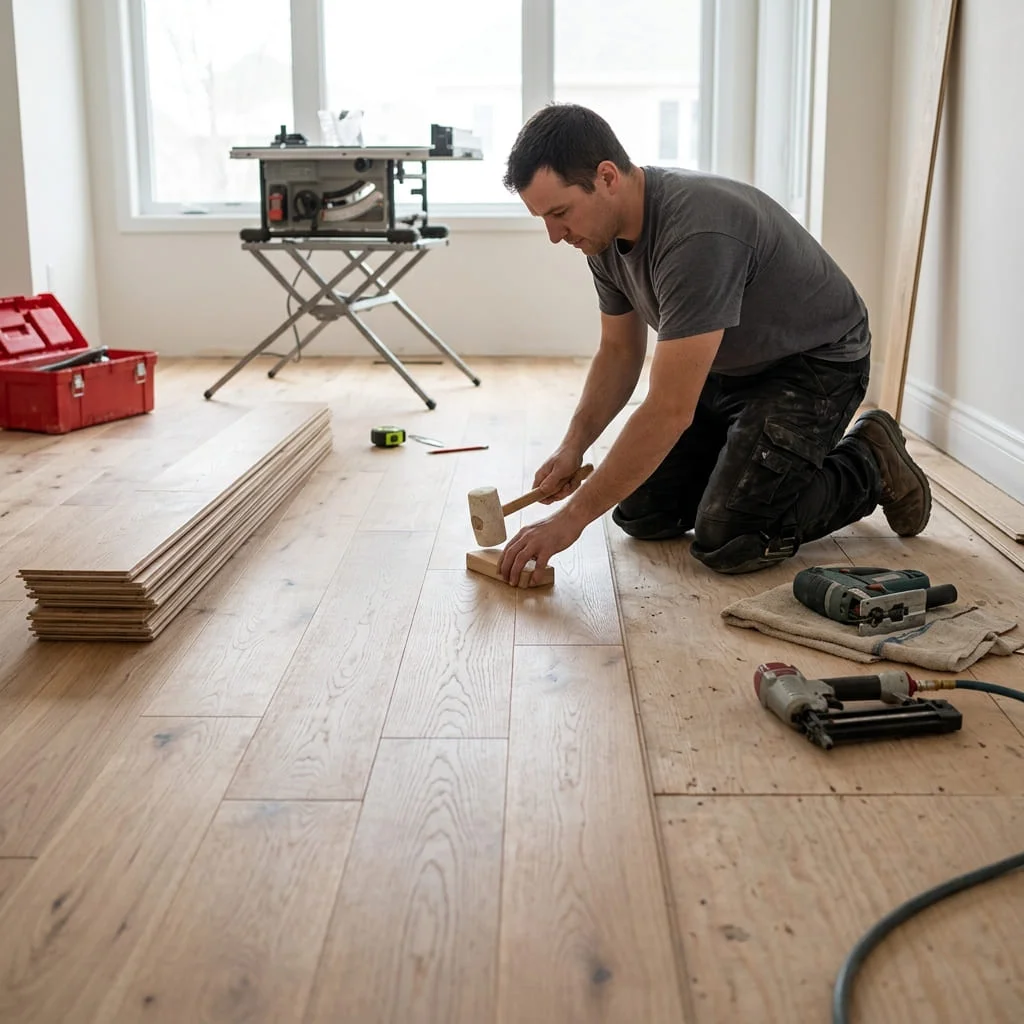
Squeaky floors in Macon homes are caused by movement, and fixing one costs between $150 and $800 depending on where the squeak is and how you reach it. The noise itself is two pieces of wood rubbing — or a nail shaft sliding through a hole it no longer grips tightly. It is rarely the emergency people fear, and it is rarely as hard to fix as they expect.
This guide covers what actually causes squeaks in Central Georgia homes, which repairs work from above and below, what the job costs locally, and the specific warning signs that mean a squeak is telling you something more serious.
What Causes Squeaky Floors
Squeaky floors are caused by one of three kinds of movement, and identifying which one you have determines the fix.
The subfloor separating from the joists. This is the most common cause by a wide margin. The subfloor panel is fastened to the floor joists below, and over years those fasteners loosen slightly. A gap opens, and every time weight crosses that spot the panel drops onto the joist and lifts off again. The squeak is the nail moving in its hole.
Floorboards rubbing against each other. Hardwood boards are installed with tongue-and-groove edges that interlock. As wood shrinks with age and seasonal drying, the fit loosens and adjacent boards move against each other underfoot. This produces a lighter, higher squeak than a subfloor problem and tends to follow the board rather than a single point.
Movement in the framing below. Less common and more significant. A joist that has twisted, a broken piece of blocking between joists, or a support post that has settled will produce squeaking along with other symptoms — sloping, bounce, or a soft feeling underfoot.
Why Macon Homes Squeak More Than Most
Macon homes squeak for two specifically Central Georgia reasons, and both come down to things expanding and contracting on a seasonal cycle.
The first is humidity. This region gets roughly 45 to 50 inches of rain a year with long, genuinely humid summers. Wood is hygroscopic — it absorbs moisture from the air and swells, then releases it and shrinks. A floor in a Macon home goes through that cycle every single year, and each cycle works fasteners a fraction looser. Homes with vented crawl spaces get an extra dose, because humid air circulating under the floor keeps the underside of the subfloor damper than the conditioned side above it.
The second is the clay. Bibb County sits on red clay soil that expands when saturated and contracts when it dries out. That movement transfers into the foundation and up through the framing. It is why older homes on brick pier foundations — common throughout Vineville and the older parts of Macon — develop floors that slope gently toward one corner over decades, along with doors that stick in one season and swing free in another.
Age is the multiplier on both. A 1920s home has had a hundred cycles of this. A 1990s home has had thirty. That is the entire reason squeaky floors are so much more common in Macon's older neighborhoods than in newer north Macon construction.
How to Find Exactly Where the Squeak Is
Locating the squeak precisely is the step most people skip, and it determines everything that follows. Work through it in order.
First, have someone walk slowly across the area while you listen from below if you have crawl space or basement access. Second, mark the exact spot on the floor with painter's tape rather than trusting memory — squeaks are surprisingly hard to relocate. Third, note whether the squeak happens on the step down, the step up, or both, since a squeak on release usually means a nail moving rather than boards rubbing. Finally, check whether the squeak follows a straight line across the room, which indicates a joist, or sits in one isolated spot, which indicates a single loose fastener.
Fixes That Work From Below
Fixing a squeak from below is always the better option when you have access, because nothing touches the finished floor. Most Macon homes with crawl spaces qualify.
- Shims with adhesive. Where the subfloor has separated from a joist, coat a wood shim with construction adhesive and tap it gently into the gap. Do not force it — driving a shim too hard lifts the floor above and creates a hump. The goal is filling the gap, not jacking the floor.
- Blocking between joists. For squeaks along a longer run, cut short lengths of dimensional lumber and fit them snugly between joists to limit flex. This is the fix for a floor that feels slightly bouncy as well as noisy.
- Screws through the joist into the subfloor. Driving short screws up through the joist into the subfloor pulls the two back together. Length matters — measure so the screw stops short of the finished floor above. A screw tip through a hardwood floor is a far worse problem than the squeak was.
- Joist tape or construction adhesive along the seam. For diffuse squeaking along a joist rather than at one point, running a bead of adhesive along the joist-to-subfloor seam damps the movement.
Fixes That Work From Above
Fixing from above is necessary on slab-on-grade homes and second stories, and the right method depends on the finished flooring.
Under carpet, a squeak-repair kit is the cleanest solution. These use a scored screw driven through the carpet and subfloor into the joist, then snapped off below the surface. The carpet fibers close over the hole and the repair is invisible. Locating the joist first with a stud finder is essential, because a screw into open subfloor holds nothing.
On hardwood, options narrow. A specialized kit for hardwood drives a screw at an angle through the board face and leaves a hole you fill with matching wood putty — effective but with a visible repair point if the fill is not matched carefully. For lighter board-on-board squeaks, working powdered graphite or talc into the seams reduces friction. It is genuinely a temporary fix, but it is free and takes five minutes.
Face-nailing hardwood is the one method to avoid. It rarely holds for long, because the same seasonal movement that caused the squeak works the new nail loose too, and you are left with a visible hole and the original noise.
On laminate or LVP, squeaks usually mean the underlayment or the subfloor beneath is uneven rather than the flooring itself. Floating floors cannot be fastened down without defeating the way they work, so the real fix involves lifting the affected area and correcting what is underneath. This is where a squeak in newer flooring often traces back to inadequate subfloor prep during the original flooring installation.
What Squeaky Floor Repair Costs in Macon
| Repair | Typical Cost |
|---|---|
| Localized fix from crawl space or basement | $150 – $350 |
| Repair from above, one room | $250 – $600 |
| Multiple rooms / widespread squeaking | $500 – $1,200 |
| Subfloor section replacement | $800 – $2,500+ |
| Joist repair or sistering | $600 – $2,000 |
| Squeak repair during a flooring install | Usually included |
Access drives these numbers more than anything else. The same squeak reachable from a crawl space might cost $200 and reachable only through finished hardwood might cost $500, because the second version involves working carefully around a floor you cannot damage.
If you are already replacing flooring in that room, fixing the squeaks costs almost nothing extra — the subfloor is exposed and it is a few minutes of screws. Timing squeak repair to coincide with flooring work is the single cheapest way to handle it.
When a Squeak Means Something Serious
A squeak means something serious when it comes with company. These are the signs worth acting on rather than living with:
- The floor feels soft or spongy rather than firm. Softness suggests the subfloor or joist has lost integrity through moisture or insect damage.
- Visible sagging or a noticeable slope in the same area as the squeak. Some slope is normal in old Macon homes, but new or worsening slope is not.
- The squeak appeared suddenly and is getting worse. A squeak that has existed for a decade is cosmetic. One that started last month is telling you something changed.
- It is near a bathroom, kitchen, or exterior wall. These are the places slow leaks hide, and moisture-damaged subfloor squeaks before it fails.
- You see mud tubes or hollow-sounding wood. Subterranean termites are active year-round in Central Georgia, and crawl space framing is exactly what they target.
Any of these justify looking underneath before repairing. Screwing down a subfloor that is soft from a leak does not fix anything — it quiets the symptom while the actual problem continues, which is how a $300 repair becomes a $3,000 one.
Water damage is the most common of these by far in Macon, and it usually traces to something small and slow. Our guide to water damage repair after a leak covers what to check when moisture is the suspected cause.
When to DIY and When to Call
Handle it yourself when the squeak is isolated, the floor feels firm, you can reach it from below, and nothing else about the floor has changed. Shims and adhesive from a crawl space are a genuinely accessible weekend job, and a carpet squeak kit is close to foolproof.
Call a professional when the squeak is widespread across a room or floor, when you have no access from below, when the floor feels soft or slopes, when the flooring is hardwood you cannot risk damaging, or when the squeak is new and changing. Those are the cases where the diagnosis matters more than the repair, and where guessing wrong is expensive.
Get a Squeaky Floor Looked At in Macon
Handyman Macon GA handles squeaky floor repair throughout Macon and Bibb County, from a single loose spot to widespread subfloor work. Call (877) 368-1249 or use the contact form to schedule a free estimate. We will find where the movement actually is, check whether moisture or framing is involved before recommending anything, and give you a written scope first.
We work across every Macon neighborhood — including Vineville, Ingleside, and Shirley Hills, where older housing stock makes squeaks especially common. Related services include floorboard repair, flooring repair, and flooring installation.
Frequently Asked Questions
- Movement between components — usually the subfloor separating slightly from the joists, or floorboards rubbing against each other or a nail shaft. In Macon the drivers are humidity and clay. Central Georgia's 45–50 inches of annual rain and humid summers make wood expand and contract seasonally, while Bibb County's red clay swells and shrinks under the foundation. Both cycles work fasteners loose over time.
- Usually not. A squeak that has been there for years, happens in one spot, and has not changed is almost always a loose subfloor connection. The signs that suggest more are squeaking with visible sagging or slope, a soft or spongy feel underfoot, a squeak that appeared suddenly and is worsening, or squeaking near a bathroom or exterior wall where moisture damage is plausible.
- Typically $150–$800 depending on access and scope. A localized repair from an accessible crawl space runs $150–$350, repairs from above through finished floor run $250–$600 per room, and widespread squeaking or subfloor replacement runs $800–$2,500+. Access is the biggest cost factor. If you are already replacing the flooring, squeak repair adds almost nothing.
- Often yes. With basement or crawl space access, driving shims with construction adhesive into the gap between joist and subfloor, or adding blocking between joists, solves most squeaks without touching the finished floor. From above, a squeak-repair kit that snaps a scored screw off below the surface works well on carpet. Avoid face-nailing hardwood — it rarely holds and leaves visible damage.
- Seasonal squeaking is normal in Central Georgia and follows humidity. Wood absorbs moisture and swells in humid summer months, then dries and shrinks in winter when heating runs. That movement opens small gaps between boards and around fasteners, so many Macon homeowners notice squeaks appear or worsen in winter and quiet down in summer. A purely seasonal, stable squeak is not a concern.
- A squeak alone does not indicate termites, but it is worth checking in Central Georgia since subterranean termites are active year-round. The signs that matter are a soft or spongy feel rather than a firm squeak, floors that flex underfoot, mud tubes on foundation walls or piers, and hollow-sounding wood when tapped. If any accompany the squeak, have it inspected before repairing — patching over damaged framing solves nothing.