
Water Damage Drywall Repair in Macon GA: What to Do After a Leak
A water stain spreading across the ceiling or a soft, bulging patch of wall is one of the most stressful things a homeowner finds — and in Central Georgia's humid climate, it's also a race against the clock. Water-damaged drywall can start growing mold within 24 to 48 hours, so what you do in the first day matters more than almost anything else. This guide walks Macon homeowners through exactly what to do after a leak, in order, and how to know when it's a patch and when the drywall has to come out.
The steps below are the same ones Handyman Macon GA follows on water-damage calls across Bibb County. Handle the urgent parts yourself, and know when to bring in help before a small leak turns into a wall full of mold.
First: Stop the Water at Its Source
Stopping the water source is the first move, before you touch the drywall itself — repairing wet drywall while it's still getting wet is pointless. Find where the water is coming from and shut it off.
- For a plumbing leak, shut off the water — either the specific fixture's valve or the home's main shutoff if you can't isolate it.
- For a roof leak, the water usually shows up on a ceiling after rain. You can't fix the roof mid-storm, but note where it's entering so it can be addressed once it's dry.
- For an overflowing appliance or bathroom, stop the source and mop up standing water immediately.
- If a ceiling is sagging and holding water, place a bucket underneath and carefully puncture the low point with a screwdriver to drain it — a controlled release is far better than the whole ceiling letting go at once.
Second: Dry the Area as Fast as You Can
Drying the area fast is what decides whether you end up with a simple repair or a mold problem. In Macon's humidity, wet drywall and the framing behind it need aggressive drying, not just time.
- Move furniture and belongings away from the wet area and pull up soaked rugs or carpet.
- Run fans and a dehumidifier aimed at the damaged area — air movement plus dehumidification dries far faster than either alone.
- Open the space up and, if the outdoor air is dry enough, get airflow through. On a humid Georgia day, keep it closed and let the dehumidifier and AC do the work instead.
- Remove baseboards or make small openings if water got behind them, so the cavity can dry rather than trapping moisture out of sight.
Third: Assess What Can Be Saved
Assessing the drywall honestly tells you whether you're patching or replacing. Not all water-damaged drywall has to come out, but the parts that lost their integrity do.
- Lightly damp, dried quickly, still firm — often salvageable. Once fully dry, a stain-blocking primer and fresh paint may be all it needs.
- Soft, spongy, sagging, or crumbling — this drywall is done. If you press it and it gives, or it's visibly bulging, that section needs to be cut out and replaced.
- Stains that return after priming — a sign of ongoing moisture or a source that wasn't fully fixed.
- Any musty smell or visible discoloration spreading — treat it as possible mold and don't seal it up until it's addressed.
The Mold Question — Take It Seriously in Central Georgia
Mold is the reason water-damaged drywall can't be treated casually here. Central Georgia's warmth and humidity create ideal conditions, and drywall's paper facing is exactly what mold feeds on once it's damp. Growth can start within a day or two, and once it's inside the wall cavity it's out of sight but not gone.
If the drywall was wet for more than a couple of days, if you see spreading discoloration, or if there's a persistent musty smell, assume mold is a real possibility. Small surface spots on a hard, dried surface can sometimes be cleaned, but mold on saturated drywall means that drywall — and often the insulation behind it — needs to come out. This is where our mold removal service comes in, handling both the removal and the drywall rebuild so the problem is gone rather than painted over.
Repairing the Drywall: Patch vs. Replace
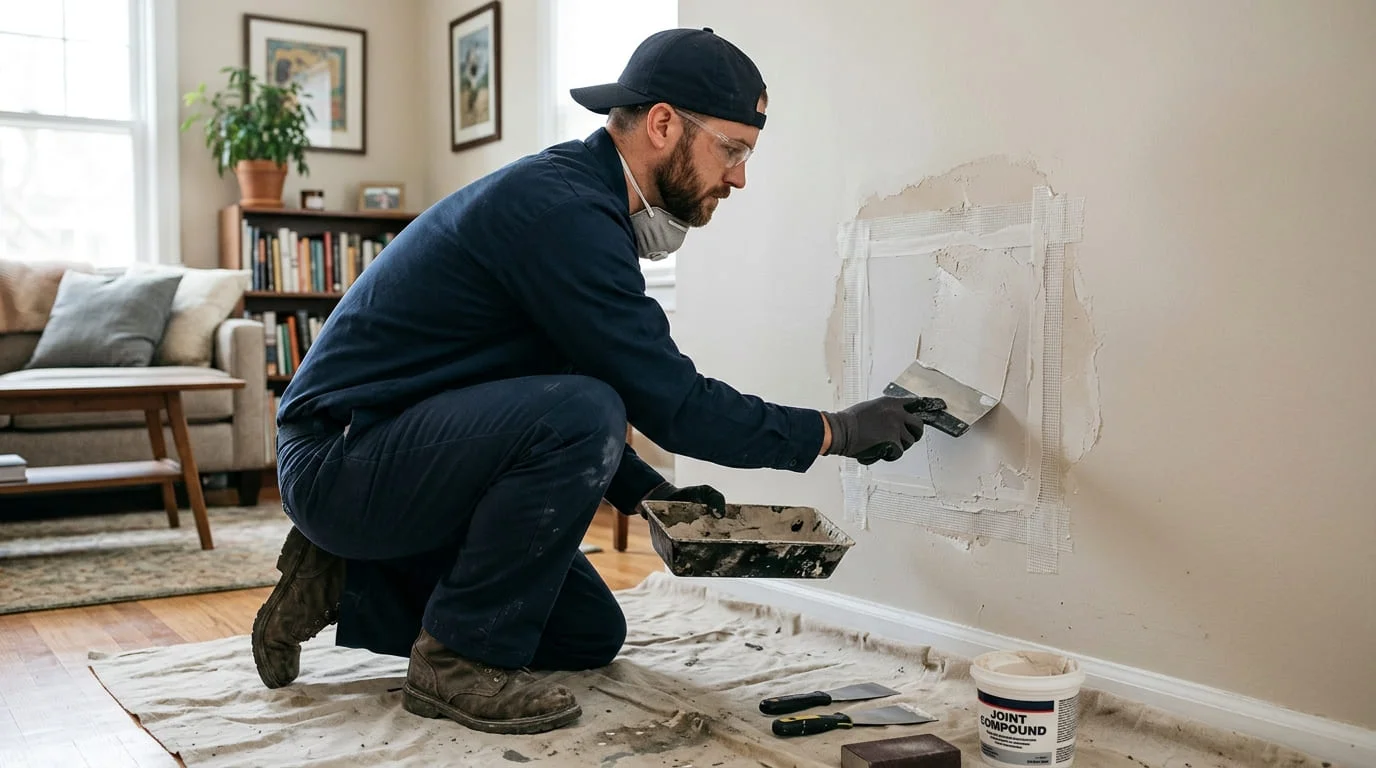
Repairing the drywall comes down to cutting back to sound material and rebuilding it properly. For a damaged section, the process is straightforward but has to be done in order: first cut out the compromised drywall back to solid material and dry framing; second confirm the cavity, insulation, and framing behind it are dry and mold-free; third cut and fit new drywall to match; fourth tape, mud, and sand the seams; and finally match the surrounding texture and prime with a stain-blocking primer before painting. Skipping the texture-matching or the stain-blocking primer is what makes a repair obvious later.
The cost of this work depends on the size of the area and whether mold is involved. For a full breakdown of what drywall work runs in the area, see our guide to drywall repair cost in Macon. The short version: a small water-damaged section typically runs $250–$800 repaired, with larger areas and mold remediation costing more.
Why Macon Homes See Water-Damaged Drywall
Water-damaged drywall is common in Macon for reasons tied to the local climate and housing. Our heavy afternoon thunderstorms and 45–50 inches of annual rain test every roof, and an aging or damaged roof lets water into ceilings. High humidity keeps everything slower to dry and feeds mold. Older homes in neighborhoods like Vineville, Ingleside, and the historic districts often have aging plumbing that develops slow leaks behind walls, and summer AC systems produce condensation that, if the drain line clogs, backs up into ceilings and walls.
The common thread is that the drywall damage is a symptom, not the disease. A stain on the ceiling is telling you something above or behind it is letting water in. Fixing the drywall without fixing the source just resets the clock until it happens again — which is why finding and stopping the leak always comes first.
When to Call a Professional
For a small stain you caught and dried fast, a confident DIYer can prime, patch, and repaint. Call a professional when the drywall is saturated or sagging, when a ceiling is involved, when you can't find or reach the leak source, or when there's any sign of mold. Those are the situations where doing it wrong means repainting twice, or worse, sealing a mold problem inside the wall.
Handyman Macon GA handles water-damaged drywall repair in Macon end to end — tracking down the source, removing damaged material, checking for hidden moisture and mold, and rebuilding with proper texture matching so the repair disappears into the wall. If a leak did the damage, our leak repair service can address the plumbing side in the same visit so it doesn't happen again.
Water Damage Repair in Warner Robins and Beyond
Handyman Macon GA serves Macon and all of Central Georgia at the same rates, with no travel premium — including Warner Robins, Centerville, Bonaire, and Kathleen. If a leak has damaged the drywall in your home, call (877) 368-1249 or use the contact form for a free assessment.
Frequently Asked Questions
- It depends on saturation. Drywall that got lightly damp and dried quickly — no sagging, crumbling, or returning stains — can often be dried, sealed, and repainted. Drywall that stayed wet, feels soft or spongy, sags, crumbles, or shows spreading stains has lost its integrity and needs to be cut out and replaced. If you press it and it gives, or it's bulging, that section should come out rather than be patched over.
- Mold can begin growing on wet drywall within 24 to 48 hours, and Central Georgia's humidity tightens that window. Drywall's paper facing is ideal food for mold once damp. That's why drying the area fast is the most important step after a leak — the sooner it's dry, the lower the mold risk. If drywall stayed wet for several days, assume mold is a real possibility and treat it accordingly.
- Repairing a water-damaged drywall section typically runs $250–$800 for a small to medium area — cutting out the damage, replacing it, taping, mudding, texture matching, and priming for paint. Larger areas, ceiling repairs, and mold remediation cost more. The price also depends on whether the leak has been fixed and how far the water spread beyond the visible stain.
- A brown or yellow stain is drywall wicking up water from a leak above or behind it — usually a roof leak, a plumbing line, an overflowing upstairs bathroom, or AC condensation. The stain means water has already reached the drywall, even if the surface feels dry now. Painting over it without fixing the source just lets the stain bleed back through and the damage continue. The leak has to be found and stopped first.
- For a small, quickly-dried stain, a confident DIYer can often patch and repaint. For saturated drywall, sagging ceilings, a leak you can't locate, or possible mold, a professional is the safer choice. Handyman Macon GA finds and addresses the source, removes damaged drywall, checks for hidden moisture and mold, and rebuilds with proper texture matching — avoiding repainting twice or sealing a mold problem inside the wall.