
The Most Trusted Handyman in Beall's Hill — Three Kinds of House, One Street.
Handyman services in Beall's Hill Macon GA start at $85 per hour, and no two houses on a block here necessarily need the same thing. Handyman Macon GA has worked the streets around Mercer and Tattnall Square Park since 2010 — Victorian cottage repair, rehab-era systems reaching the end of their service life, and infill new construction now old enough to need real maintenance.
Beall's Hill came through one of the most concentrated neighborhood revitalizations in Macon. That history is the reason the housing stock is layered the way it is, and it is the reason the single most useful question we can ask about your house is not how old it looks — it is when it was last worked on.
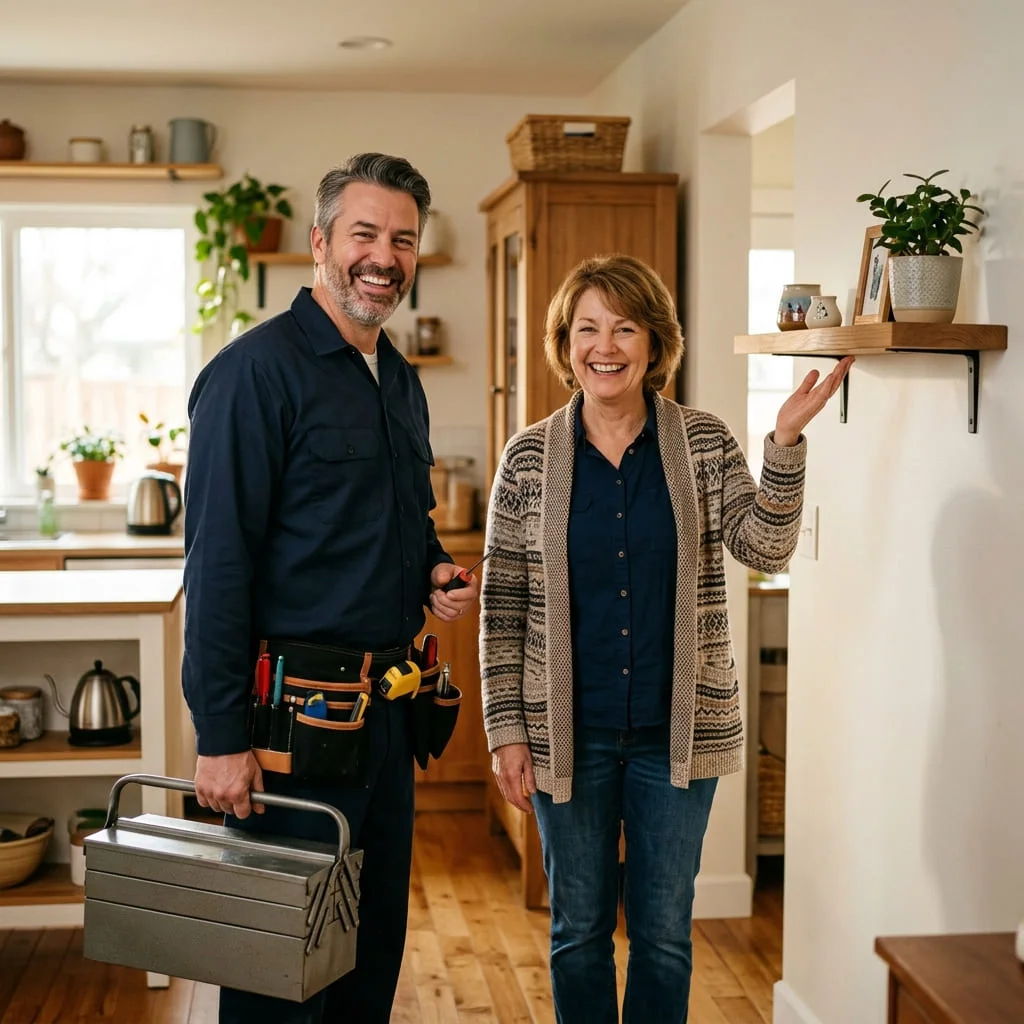
Work that fits the house you actually own.
Every service below is available throughout Beall's Hill, handled by the same licensed crew that has worked on Macon homes since 2010. No subcontractors, no hand-offs, no surprise second company showing up.
Water Heater Service
The first rehab-era system to reach the end of its life, and the one that does the most damage when it goes.
Learn more →HVAC Repair & Service
Rehab-era systems in year fifteen and up, plus the duct runs squeezed into houses never designed for them.
Learn more →Plumbing Repair
Failing builder-grade valves and supply lines, plus the original cast iron still under untouched houses.
Learn more →Electrical Repair
Outlets, breakers, and fixtures, plus finding where a rehab stopped and the original wiring resumes.
Learn more →Cabinet Repair & Refacing
Rehab-era boxes that are sound with doors and hardware that are not — refaced for a fraction of replacement.
Learn more →Drywall & Plaster Repair
Modern board in rehabbed and infill houses, original plaster on lath in the ones that were never gutted.
Learn more →Window Repair
Original sash restored where it survives, failed builder-grade vinyl replaced where a rehab installed it.
Learn more →Porch & Carpentry Repair
Columns, decking, steps, and rails — including replacement porch work from a rehab now due itself.
Learn more →Interior & Exterior Painting
Lead-safe prep on original surfaces and full repaints on rehab-era exteriors reaching their second cycle.
Learn more →Roof Repair
Leaks and flashing, and an honest read on how much life is left in a roof installed during the rehab wave.
Learn more →Flooring Repair
Refinishing original heart pine and dealing with the laminate a rehab put over it in the rooms it did not survive.
Learn more →Gutter Repair & Cleaning
Keeping roof water away from foundations on tight lots where the neighboring house is fifteen feet away.
Learn more →We ask when the house was last worked on, not just how old it is.
In most neighborhoods the build year tells you nearly everything you need. In Beall's Hill it tells you about the shell and almost nothing about the systems. A house with an 1897 date on it may have wiring, plumbing, HVAC, and a roof that all went in during one season in 2006, and every one of those is now approaching the same milestone at the same time.
That changes the advice. A homeowner who knows their systems share a birthday can sequence four replacements over three years instead of absorbing them as four emergencies. Nobody can give that advice without asking the right question first, and the right question here is about the renovation, not the construction.
- 01
We date the systems, not just the house.
Water heater, panel, condenser, and roof all carry dates. Five minutes of looking tells us what is coming and roughly when.
- 02
We check for covenants before quoting exterior work.
Houses sold out of a preservation revolving fund carry restrictions that run with the deed. Better to know before, not after.
- 03
We separate what is worth repairing from what is not.
Rehab-era framing and tile are worth keeping. Rehab-era faucets and vanities usually are not. We say which is which.
- 04
One-year workmanship warranty.
If anything we did is not right within a year, we come back and fix it at no charge — in Beall's Hill and across Bibb County.
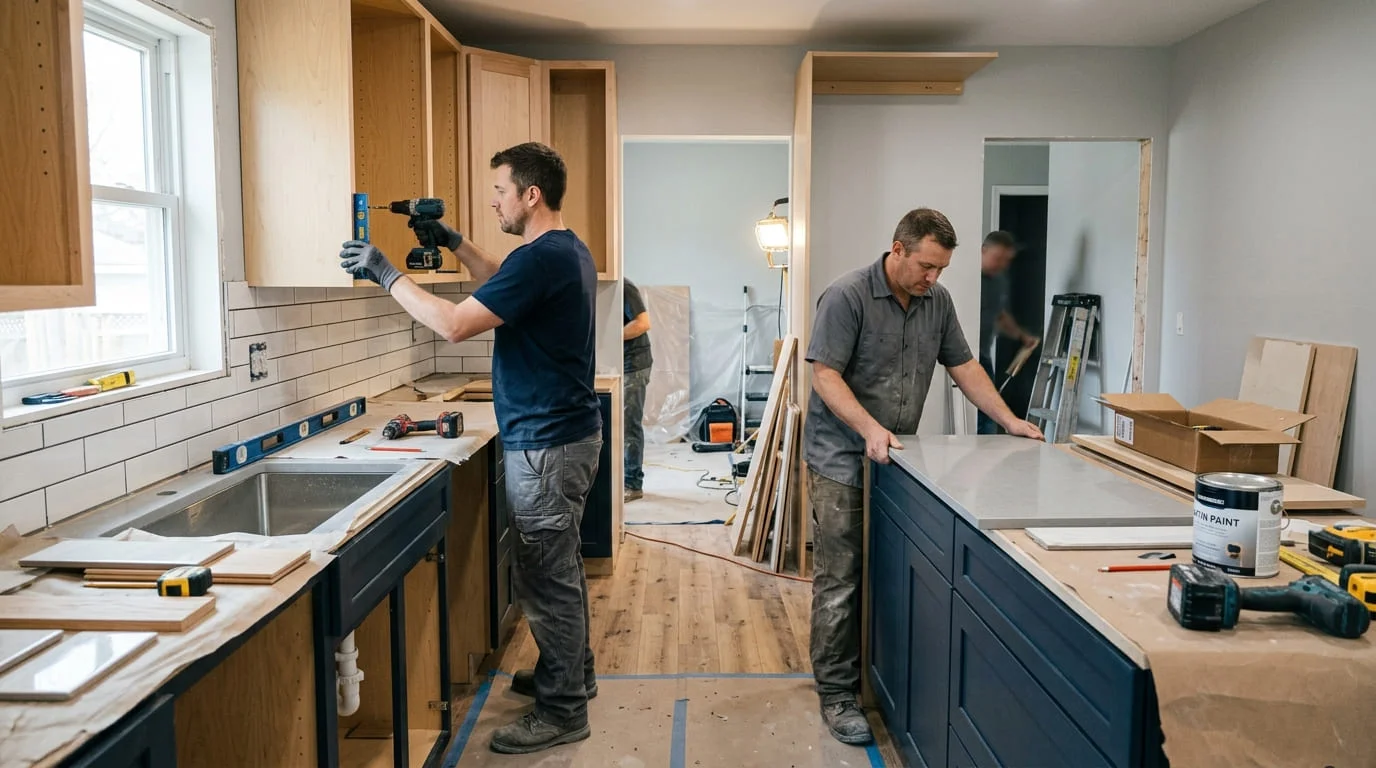
Why Beall's Hill Homes Develop the Problems They Do
Beall's Hill sits immediately east and south of Mercer University, running toward Tattnall Square Park and the streets around Oglethorpe and Hazel. It was built out largely between the 1890s and the 1920s, declined through the second half of the twentieth century, and then became the focus of a sustained, deliberate revitalization effort involving Mercer and Macon's preservation community.
That last part is the whole story for repair purposes. Most Macon neighborhoods aged continuously. Beall's Hill did not — it aged, stopped, got substantially rebuilt over a compressed period, and started aging again from a new zero.
Three housing stocks, one street
Walk a block here and you can pass all three types without noticing the difference. The untouched originals are 1890s-to-1920s Victorian and folk Victorian cottages with heart pine framing, plaster on wood lath, brick pier foundations, and original wood sash. They behave like the houses in College Hill and Pleasant Hill, and they need the same patient, profile-matching approach.
The rehabbed originals look the same from the sidewalk and are completely different inside. The shell is historic, the systems are modern, and the two have very different ages. This is the largest and most misunderstood category in the neighborhood.
The infill is new construction built on lots that had sat vacant, often designed with a porch and roofline that reference the street. Structurally these are ordinary modern houses — platform framing, modern sheathing, vinyl or clad windows — and they should be maintained like any house of their build year, not like their neighbors.
The practical problem is that advice circulates on a block faster than accurate information about which house is which. A homeowner hears from a neighbor that the guy who rebuilt their piers was great, and they do not have piers.
The rehab cohort clock
This is the single most useful thing we know about Beall's Hill, and it is the reason a rehabbed house behaves unlike almost any other house in Macon.
In a normally aged home, systems were installed across decades. The roof went on in one year, the furnace was replaced in another, the water heater in a third, the kitchen in a fourth. Failures arrive spread out, one at a time, and a homeowner absorbs them as ordinary maintenance.
In a gut-rehabbed house, all of it went in during one season. The wiring, the panel, the supply and drain lines, the HVAC equipment, the water heater, the roof, the kitchen, the bath fixtures, the exterior paint — one birthday, shared.
Service lives then do what service lives do. Water heaters go somewhere around ten to fifteen years. Builder-grade faucet cartridges and shutoff valves start weeping around the same window. Architectural shingles run twenty to thirty. Condensers run fifteen to twenty. Exterior paint on wood wants a repaint every eight to twelve years in this climate.
Line those up against a single install date and a cluster appears. For the wave of Beall's Hill rehabs, that cluster is landing now, and it is why we get calls from this neighborhood that sound like a house falling apart when it is actually a house doing exactly what it was always going to do.
The response is sequencing, not panic. Find the install date, list what is past or approaching its service life, and put the items in order of what causes damage when it fails rather than what is most annoying. A water heater in a finished interior space outranks a tired kitchen every time, because one of those ruins a floor and the other just looks dated.
Covenants, and why we ask before quoting
A significant number of Beall's Hill houses were sold out of a preservation revolving fund — a mechanism where a nonprofit buys a deteriorated historic house, rehabilitates or stabilizes it, and resells it with protective covenants recorded against the deed.
Those covenants restrict exterior alterations, and critically they run with the property rather than the owner. A buyer three transactions later is still bound by them, and frequently does not know it until they try to change a window.
This is why we ask about covenants before quoting siding, windows, porch modifications, or a change in roofing material. It is a two-minute question that occasionally saves a homeowner from ordering materials they are not permitted to install. It also affects the honest answer on repair-versus-replace, because a covenant can make repairing an original element the only lawful option regardless of cost comparison.
Tight lots and where the water goes
Beall's Hill was platted on narrow urban lots, and houses frequently sit fifteen to twenty feet apart with very little grade between them. Central Georgia delivers roughly 45 to 50 inches of rain a year, and on a lot that size there is nowhere for roof water to disperse on its own.
Gutters that overflow, downspouts discharging at the foundation, and grade that slopes toward the house instead of away are the three causes behind most of the crawl space moisture, pier movement, and basement dampness we find here.
It is unglamorous work and it is consistently the highest-return money a homeowner in this neighborhood can spend. Extending a downspout costs very little and prevents a category of problem that costs a great deal. Whether the house is an 1890s original, a 2006 rehab, or 2015 infill, that particular rule does not change.
What Beall's Hill Homeowners Are Saying
Neighbors near Mercer and Tattnall Square Park who called once and kept the number.
"Our house is from 1901 but was gutted in 2007, and we had four things break in one year. Handyman Macon GA looked at the dates on everything and explained that all of it went in at the same time. They gave us a three-year order to replace things in. That single conversation was worth more than the repair."
"I was ready to order replacement windows until they asked whether my deed had preservation covenants on it. It did. They found out before I spent the money instead of after, then repaired the sash I already had. Nobody else even asked the question."
"Newer infill house, and water was getting under the back corner every time it rained hard. They regraded the side yard and put a real extension on two downspouts. Total cost was small and the problem has not come back through two storm seasons."
Several things failing at once in your Beall's Hill house?
From Mercer to the park.
We cover all of Beall's Hill — the blocks running east and south from Mercer University, the streets around Tattnall Square Park, and the area toward Oglethorpe, Hazel, and Ash.
Beall's Hill is minutes from downtown and directly adjacent to College Hill, which makes it one of the faster neighborhoods for us to reach on short notice.
Also serving Warner Robins, Gray, and all of Central Georgia. See all 70+ services →
Call (877) 368-1249Common Questions from Beall's Hill Homeowners
Have a question not listed here? Call us at (877) 368-1249 and we will answer it directly.
- Because it was all installed at once. A house that came through a full rehab got its wiring, plumbing, HVAC, water heater, roof, kitchen, and bath in a single season, so those systems share one birthday. In a normally aged house, failures arrive one at a time across forty years. In a rehabbed house they cluster, usually somewhere between year fifteen and twenty-five of the renovation. Nothing is wrong with the work — you are hitting the end of several service lives at once, and knowing that lets you budget rather than be surprised.
- Beall's Hill has three kinds of house on the same blocks, and two look similar from the sidewalk. Untouched originals from the 1890s–1920s have heart pine framing, plaster on lath, and brick piers. Rehabbed originals have a historic shell over modern systems. Infill new construction is modern throughout even when the porch and roofline match the street. Advice correct for one is often wrong for another, which is why neighbor recommendations travel badly here.
- Most handyman work in Macon runs $85–$125 per hour with a typical half-day minimum. Here it depends on which of the three housing types you own. Infill prices like any modern house because the materials are current and standard. An untouched original prices higher for plaster, original sash, or pier work. A rehabbed original is usually the most predictable of the three — modern, accessible systems inside a historic shell. We tell you which situation you are in during the estimate.
- Frequently yes, depending on how your house came to you. Houses sold out of a preservation revolving fund typically carry protective covenants recorded against the deed restricting exterior alterations. Those covenants run with the property, so a buyer three owners later is still bound. Before we quote exterior work — siding, windows, porch changes, roofing material — we ask whether covenants apply, because the answer changes what is allowed and therefore what the job is.
- Yes, across all of Beall's Hill — the blocks running east and south from Mercer, the streets around Tattnall Square Park, and the area toward Oglethorpe and Hazel. We work for owner-occupants, landlords, and investor-owners equally, and handle single repairs as readily as full turn work between tenants. Beall's Hill is minutes from downtown, making it one of the faster neighborhoods for us to reach on short notice.
- It splits cleanly. Repair is right for anything structural or well-made — framing, roof decking, solid-core doors, tile set over proper backer. Replacement is usually right for what was chosen on price during a rehab or spec build: builder-grade faucets and valves, particleboard-core vanities, the cheapest tier of vinyl window, and original-to-the-rehab water heaters past year twelve. Repair money on those buys a delay. We are direct about which category an item falls into.