
Pressure Washing in Milledgeville, GA — And Knowing When Not to Use Pressure at All
Pressure washing in Milledgeville, GA runs $150 to $275 for a driveway and $250 to $450 to soft wash a single-story house. Handyman Macon GA matches the method to the surface across Baldwin County, which matters more here than almost anywhere in Middle Georgia — the antebellum brick and soft lime mortar downtown can be permanently damaged by a pressure washer in an afternoon. Licensed, insured, 35 minutes up GA-49.
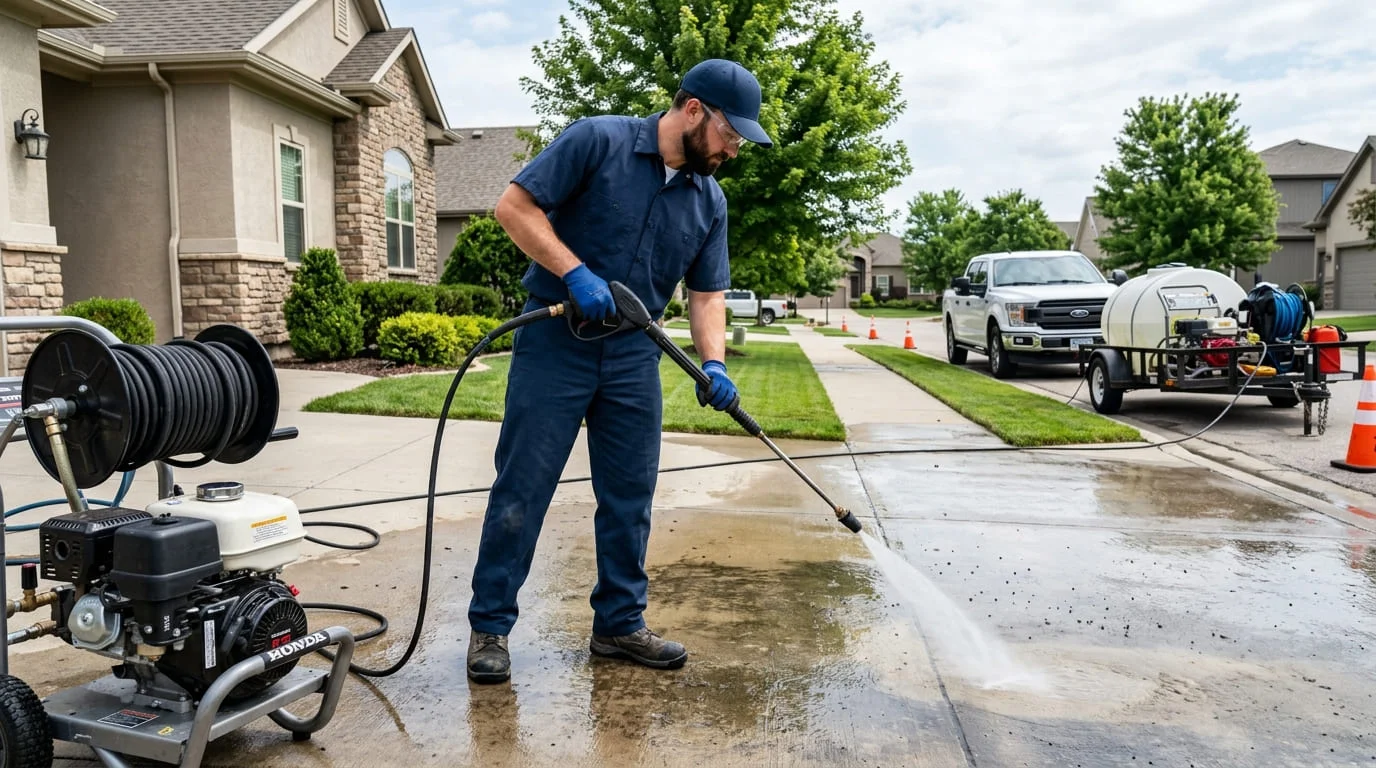
The most useful thing a washing contractor can tell you in Milledgeville is where not to point the wand.
This town holds a genuinely significant collection of early nineteenth century masonry, and that masonry does not behave like modern brickwork. Brick fired in the 1830s is softer than brick fired today, and the lime mortar around it is softer still — deliberately, because mortar is designed to be the sacrificial element that gives way before the brick does. A pressure washer inverts that logic. It scours the soft mortar out of the joints and abrades the brick face, and neither of those comes back.
Washing Services Available in Milledgeville
Washing services in Milledgeville cover driveways, walkways and patios, house exteriors in vinyl, brick, and wood, historic masonry at low pressure, decks and docks, fences, and roof and gutter exteriors. We select pressure and solution per surface, and we will say plainly when a surface should not be pressure washed at all.
Matching the Method to the Surface
Matching method to surface is the whole job in a town built across two centuries, and Milledgeville presents three very different cleaning problems.
Historic masonry and clapboard downtown
Soft brick, lime mortar, and painted wood clapboard all fail under high pressure, and they fail permanently. Eroded mortar joints let water into a wall that was designed to shed it, which turns a cosmetic job into a masonry repair. Abraded brick faces lose the harder fired outer skin and then weather far faster than they did before cleaning.
There is a second reason for restraint on these houses. Anything painted before 1978 is likely to have lead in the layers, and Milledgeville's historic and in-town stock is overwhelmingly pre-1978. Blasting that paint sends chips and dust across the garden, which is precisely the outcome lead-safe working practice is designed to avoid. Low-pressure soft washing sidesteps both problems: the growth is killed with solution and rinsed at low pressure, nothing is driven off the surface, and the building is cleaned rather than eroded.
Turnover curb appeal in the rental belt
Rental properties near Georgia College get washed for a different reason — they are being shown. Georgia summers grow algae and mildew on north elevations and shaded walkways fast, and a green-streaked house shows badly whatever the interior looks like.
The practical point for landlords is timing and grouping. Exterior washing done in the same visit as the rest of the summer make-ready costs less than a separate trip, and a soft wash that kills the growth keeps a property looking presentable through the whole letting season rather than greening up again in six weeks. Concrete walkways and drives can take genuine pressure, so those get cleaned properly rather than gently.
Algae and safety at Lake Sinclair
Lake Sinclair surfaces are wet more often than anything inland, so organic growth is constant rather than seasonal. Dock boards, boat ramps, steps down to the water, and shaded patios all become genuinely slippery, and that is a safety problem before it is an appearance problem.
The temptation is to hit them hard. That is a mistake on wooden dock boards, because high pressure raises and furs the wood grain. A furred board holds more water, dries more slowly, and grows algae back quicker than a smooth one, so an aggressive clean buys a worse surface that needs doing again sooner. Lower pressure with the correct solution kills the growth, leaves the board smooth, and lasts.
How a Washing Job Works — Step by Step
- First, identify the surface and its age. Modern brick, historic soft brick, painted pre-1978 wood, vinyl, concrete, and dock lumber all take different treatment, and the age of the building decides as much as the material.
- Second, protect what is around it. Plantings are wetted and covered, fixtures and outlets are protected, and runoff is directed sensibly rather than allowed to carry material wherever it likes.
- Third, apply solution and let it work. On organic growth the solution does the cleaning during its dwell time. Rushing this step is what leads people to compensate with pressure.
- Finally, rinse at the correct pressure and check. Rinsing runs top down at the lowest pressure that does the job, and we walk the surface afterward for missed areas and any damage that was there before we started.
Pressure Washing Cost in Milledgeville, GA
Washing costs in Milledgeville depend on area and on how careful the surface needs us to be. A driveway or walkway typically runs $150–$275. Soft washing a single-story house exterior is $250–$450. A deck or dock runs $125–$225. Larger properties and two-story exteriors run $450–$750.
Historic masonry is quoted after inspection rather than by the square foot, because the right approach depends entirely on the condition of the mortar joints. Rental properties washed alongside other summer work price better than standalone visits.
Serving Milledgeville, Lake Sinclair, and Baldwin County
We cover downtown Milledgeville, the Antebellum Trail area, Crestwood, the Georgia College neighborhood, the Lake Sinclair shoreline, and the rest of Baldwin County. Washing is usually the first step before exterior painting in Milledgeville, and cleaned dock boards are the right moment to check the structure underneath them. You can also read about exterior washing in Macon. See all our work for Milledgeville homes →
Green streaks or a slippery dock in Milledgeville? Let's clean it the right way.
Washing Questions from Milledgeville Homeowners
Have a question not listed here? Call us at (877) 368-1249 and we'll answer it directly.
- Yes. Handyman Macon GA handles pressure washing and low-pressure soft washing throughout Milledgeville, Lake Sinclair, and Baldwin County — driveways and walkways, house exteriors, historic brick and clapboard, decks, docks, and fences. We match pressure to the surface rather than using one setting on everything, which matters a great deal on this town's older buildings.
- A driveway or walkway typically runs $150–$275. Soft washing a single-story house exterior is $250–$450. Cleaning a deck or dock runs $125–$225. A larger property or a two-story house exterior runs $450–$750. Historic masonry is quoted after we see it, because the correct method depends on the condition of the mortar.
- High pressure is not, and this is the most damaging mistake made on Milledgeville's historic buildings. Old brick was fired softer than modern brick and the lime mortar around it is deliberately softer still, so the mortar sacrifices itself rather than the brick. A pressure washer strips that mortar out of the joints and erodes the brick face. Correct cleaning is low pressure with the right solution and dwell time.
- Soft washing cleans with a solution and rinse at garden-hose pressure rather than blasting the surface. It works because most exterior discoloration in Georgia is organic — algae, mildew, and lichen — and those are killed chemically rather than removed mechanically. The result lasts longer because the growth is dead rather than knocked off, and nothing is eroded in the process.
- It should. Paint on a pre-1978 house is likely to contain lead somewhere in the layers, which describes most of Milledgeville's historic and in-town stock. High pressure on that paint blasts chips and dust across the yard, which is exactly what lead-safe practice exists to prevent. Low-pressure methods that do not drive material off the surface are the appropriate approach on those houses.
- Yes, and docks want restraint rather than power. Boards over water grow algae continuously and get genuinely slippery, which is a real safety issue. But aggressive pressure raises the wood grain, leaving a fuzzy surface that holds more moisture and grows algae back faster. A lower-pressure clean with the right solution leaves the board smooth and stays clean longer.