
Mold Removal in Milledgeville, GA
A musty closet, a dark patch on the bathroom ceiling, or a damp crawl space — Handyman Macon GA removes household mold and fixes the moisture source causing it. Licensed, insured, and serving Milledgeville, Baldwin County, and the Lake Sinclair area since 2010.
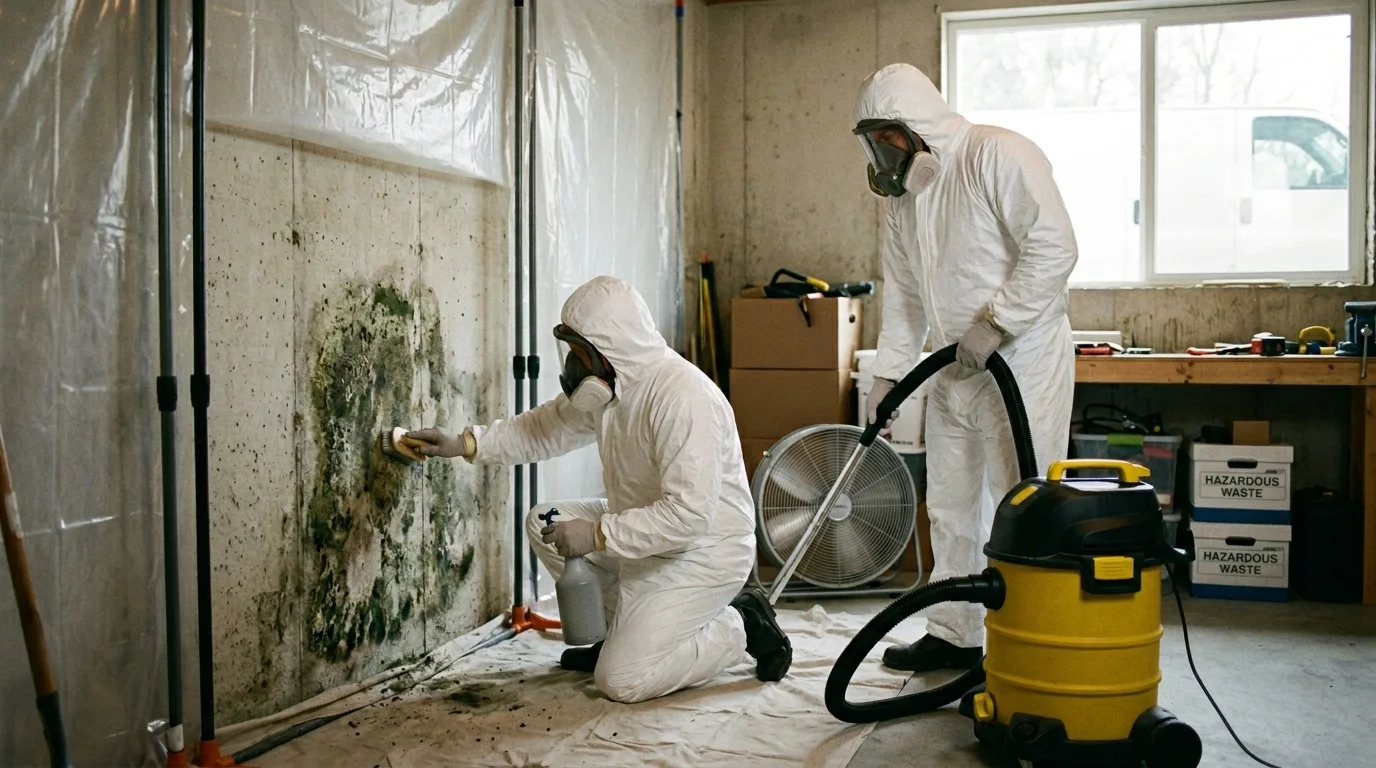
Milledgeville's mix of antebellum and Victorian-era homes near downtown, newer construction further out, and lake homes and cabins around Lake Sinclair all share the same enemy: Georgia's humidity. Bathroom ceilings, closets backed against exterior walls, and crawl spaces are the most common spots where Handyman Macon GA finds mold on Milledgeville service calls — usually fed by a poorly vented bathroom fan, a slow leak, or a crawl space without a proper vapor barrier.
Lake Sinclair properties tend to see even more condensation and moisture buildup than inland homes, which makes mold in closets, under sinks, and in crawl spaces a recurring issue for cabin owners. For Milledgeville's historic homes, we work carefully around original plaster and trim rather than just ripping it out.
Mold Removal Services in Milledgeville
For everyday household mold — bathrooms, closets, crawl spaces, basement walls — this is a standard service call. For extensive mold following a flood or large structural areas, we'll tell you honestly and point you toward a certified remediation specialist; that's a different scope than handyman service.
Signs You May Have a Mold Problem in Milledgeville
Not all mold announces itself with a visible black spot. The earliest signs are often a persistent musty smell in a closet or bathroom, a slight discoloration on grout or caulk that won't scrub away, or unexplained allergy-like symptoms — sneezing, a stuffy nose, or eye irritation — that improve when you're away from the house. Around Lake Sinclair especially, where condensation runs higher than inland homes, it pays to check the usual hiding spots: under sinks, behind toilets, inside HVAC vents, and around window sills where moisture collects.
Crawl space mold is trickier because it's out of sight. Watch for a musty smell coming up through floor vents or registers, especially after rain, or insulation that feels damp to the touch if you've ever looked underneath. If you've noticed any of these signs, it's worth having it checked before a small patch becomes an expensive remediation.
Why DIY Mold Removal Often Fails
Bleach is the most common DIY mold treatment, and it's also one of the least effective on porous surfaces like drywall, wood, and grout. Bleach kills surface mold on contact, but its water content soaks into the material and can actually feed the roots that survive beneath the surface — which is why DIY-treated mold so often comes back within weeks looking the same or worse. Store-bought mold sprays have a similar problem: they're formulated for non-porous surfaces like tile and don't penetrate far enough to address mold growing inside a wall cavity or under flooring. On Milledgeville's historic homes especially, aggressive DIY scrubbing can also damage original plaster and trim that's worth preserving.
The bigger issue is that DIY treatment almost never addresses the moisture source. Painting over a stain or spraying a closet wall treats the symptom, not the cause — and the mold returns as soon as humidity rises again. A proper repair finds and fixes what's feeding the mold first, then treats what's already grown. That's the difference between a one-time fix and a recurring problem.
How We Remove Mold
- Moisture source inspection — We find what's feeding the mold before touching it: a leak, a poorly vented fan, crawl space humidity, or grading issues near the foundation.
- Containment — The affected area is isolated with plastic sheeting where needed to keep spores from spreading during removal.
- Removal and treatment — Affected material is removed or treated with an antimicrobial, then HEPA vacuumed to capture loose spores.
- Source repair — The moisture source is fixed in the same visit wherever possible, with prevention guidance to reduce recurrence.
What's Included in Every Milledgeville Mold Removal Visit
- On-site inspection to find the moisture source — not just the visible mold
- Containment of the work area to prevent spore spread
- Removal or antimicrobial treatment of affected material
- HEPA vacuuming to capture loose spores
- Source repair — fan re-routing, leak fix, or ventilation improvement — in the same visit wherever possible
- Free written estimate before any work begins
- Prevention guidance to reduce recurrence
Mold Removal Cost in Milledgeville, GA
Small-area surface mold — a bathroom ceiling corner, closet wall, or window sill — typically runs $250–$450 including treatment and minor source repair. Moderate areas like a crawl space joist section or basement wall section are generally $500–$1,200. Larger crawl space treatments, including vapor barrier work, run $1,200–$3,000.
Every job gets a free written estimate before we start. Call (877) 368-1249 to schedule.
Serving Milledgeville, Baldwin County, and Lake Sinclair
We cover all of Milledgeville, Baldwin County, and the Lake Sinclair area. See everything we do for Milledgeville homes →
What Milledgeville Homeowners Are Saying
"We have a cabin on Lake Sinclair and noticed mold building up in the closet by the back door every spring. They found a ventilation issue, treated the mold, and added a vent to keep air moving. No more musty smell."
"Our house is over 100 years old with original plaster walls, and I was worried about mold treatment damaging the plaster. They worked carefully, treated the affected area, and fixed the leak in the wall above it without tearing anything out."
"Crawl space under our house had mold on several joists near the back corner. They treated it, put down a vapor barrier section that was missing, and explained exactly what to watch for going forward. Fair price and no upsell pressure."
Spotted mold in your Milledgeville home or cabin? Let's take care of it.
Mold Removal Questions from Milledgeville Homeowners
Have a question not listed here? Call us at (877) 368-1249 and we'll answer it directly.
- Yes. Handyman Macon GA handles residential mold removal throughout Milledgeville, Baldwin County, and the Lake Sinclair area — bathrooms, closets, crawl spaces, and basement walls. We've served the area since 2010 and Milledgeville is about 35 minutes from our Macon base.
- Small surface mold — a bathroom corner or closet wall — typically runs $250-$450 including treatment and minor source repair. Larger areas like crawl space sections run $500-$1,200, and full crawl space treatment with vapor barrier work runs $1,200-$3,000. We give a free written estimate before any work starts.
- Yes. Milledgeville has some of Georgia's finest antebellum and Victorian-era homes, and original plaster walls and old crawl spaces are common spots for mold. We treat these carefully, working around historic plaster and trim rather than just ripping it out.
- Yes. Lake homes and cabins around Lake Sinclair see more humidity and condensation than inland properties, which makes mold in closets, under sinks, and in crawl spaces especially common. We treat the mold and address the underlying moisture issue, whether that's ventilation, a leak, or grading near the foundation.
- Yes. Properties directly on Lake Sinclair see more ambient humidity and condensation than homes further inland, which means closets, under-sink cabinets, and crawl spaces should be checked more often — ideally once or twice a year rather than only when a problem becomes visible.