
The Most Trusted Electrical Repairs in Bonaire, GA — Modern Wiring, Twenty-Year-Old Devices
Electrical work in Bonaire, GA starts at $95 for an outlet or switch replacement and runs to about $300 for a ceiling fan installed where no rated box exists yet. Handyman Macon GA works the newest housing stock in Houston County, where the wiring was code-current the day it went in and the failures now are worn devices, aging GFCIs, and houses being asked to power things nobody planned for in 2006. Licensed, insured, and 25 minutes out via GA-96 since 2010.
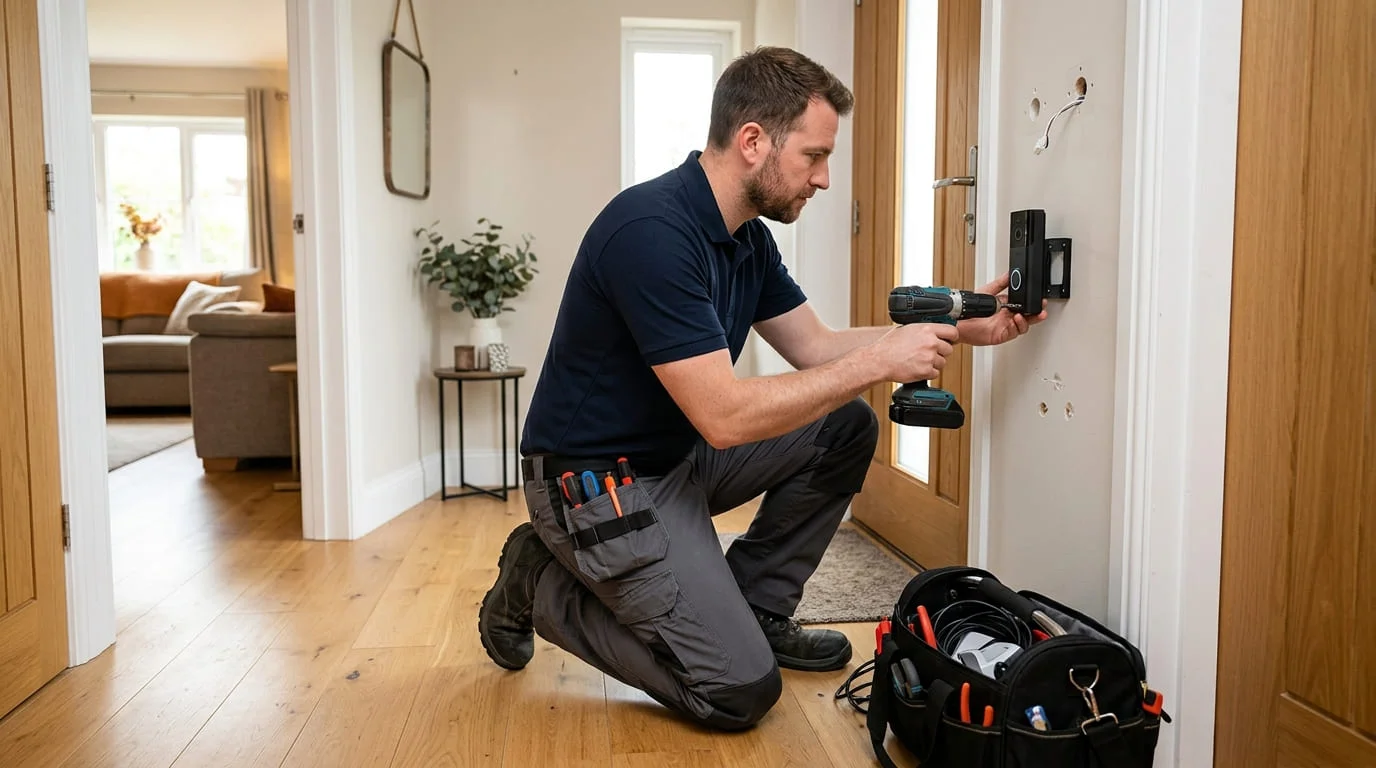
Electrical work in Bonaire is unusual in Middle Georgia because there is nothing wrong with the wiring. This community was built almost entirely from the late 1990s onward along the GA-96 corridor, which means 200 amp service, grounded circuits, AFCI and GFCI protection, and a panel with capacity to spare in essentially every house.
That removes the entire category of problems we spend our time on in Macon and Perry — no knob-and-tube remnants, no ungrounded three-prong outlets, no undersized panel carrying eighty years of additions. What Bonaire has instead is a device-and-demand problem. The protection hardware is now old enough to need testing, and the houses are being asked to run things that did not exist when they were wired.
Electrical Services We Handle in Bonaire
Electrical services in Bonaire cover outlet and switch replacement, light fixture installation, ceiling fan installation and replacement, dimmer and smart switch work, GFCI and AFCI installation and troubleshooting, exterior and security lighting, smoke alarm replacement, adding receptacles to existing circuits, and diagnosing breakers that trip.
Our scope stops where the panel begins. Service entrance work, meter bases, panel replacement, and new circuits requiring a permit are licensed electrician work — and since Bonaire is unincorporated, that permitting runs through Houston County rather than a city office.
The most frequent version of this conversation out here is EV charging. A dedicated 240-volt charger circuit lands in the panel and needs a licensed electrician and a permit. We say that plainly rather than finding a way to call it something else.
Why Bonaire Homes Have the Electrical Issues They Do
Bonaire homes have electrical issues for reasons that have nothing to do with defects, and everything to do with a whole community reaching the same age at once.
Protection devices that quietly stopped protecting
GFCI and AFCI devices are not permanent. Their internal sensing components degrade over roughly fifteen to twenty-five years, and the failure mode is the dangerous one — the receptacle keeps delivering power perfectly while losing the ability to trip.
A homeowner has no way of knowing this has happened unless they test it. The device looks identical, the outlet works, the kitchen and bathroom appear protected, and the protection is gone.
With Bonaire's median home at around fifteen years old, a very large number of houses out here are entering exactly that window at the same time. Testing every GFCI in a house takes about fifteen minutes and requires nothing but pressing the button — if power does not cut, the device needs replacing.
AFCI breakers age in the opposite direction and become a nuisance rather than a silent risk. As they get older they begin tripping on normal loads, and homeowners respond by assuming there is a wiring fault somewhere.
Usually there is not. It is the breaker itself, and distinguishing a nuisance-tripping AFCI from a genuine arc fault is exactly the kind of diagnosis worth paying someone to make properly rather than guessing at.
Twenty years of cycling on builder-grade devices
The receptacles and switches installed across these subdivisions were standard builder-grade parts, chosen at volume pricing across hundreds of houses.
They work well for a long time and then start showing their age in small ways. The contacts inside an outlet lose their grip until a plug sags out under its own weight, which is not merely annoying — a loose connection generates heat, and heat at a device is the beginning of a real problem.
Switches develop intermittent contact. Exterior receptacles and their weatherproof covers break down under Georgia sun and weather. Photocells on outdoor fixtures fail and leave lights on all day or off all night.
None of it is dramatic and all of it is cheap to correct in batches. Replacing every tired device in a house in one visit costs far less per device than calling them in one at a time, which is the practical advice we give most Bonaire homeowners who ask.
Houses wired in 2006 for how people lived in 2006
The other half of Bonaire's electrical work is not repair at all. It is addition, and it comes from the gap between how these houses were designed and how they are used now.
A 2006 subdivision house was wired for a television, a desktop computer, and a garage with a door opener. It was not wired for a home office running two monitors and a space heater, an EV in the driveway, a patio that got built five years after the house, a garage gym, or the outdoor receptacles and lighting that everyone now expects.
Some of that we handle directly — adding receptacles to an existing circuit, installing fans in bedrooms that only ever had a light fixture, exterior and security lighting, smart switches and dimmers.
Some of it needs a new circuit, which needs a licensed electrician and a county permit. Knowing which side of that line your project falls on before you start is genuinely useful, and it is a free conversation.
How Electrical Troubleshooting Works — Step by Step
Electrical troubleshooting works in four steps, and in modern construction the sequence usually produces a clear answer quickly.
- First, map what is actually on the circuit. A breaker that trips is functioning correctly, and the real question is what is asking too much of it. In a Bonaire house that answer is usually a load added years after the wiring, not a fault.
- Second, test the protection devices rather than trusting them. Every GFCI gets tested for whether it still trips. AFCI breakers get evaluated for whether they are nuisance-tripping with age or responding to something real. This is the step that matters most at this housing age.
- Third, separate a device fault from a load problem. A worn receptacle is a small replacement. A circuit that is simply overloaded needs load redistributed or capacity added, and the latter is licensed work. Knowing which one you have before spending is the entire point.
- Finally, repair and verify under load. Devices get tested energized and loaded, not just visually checked. Fans and fixtures get verified as mounted to a properly rated box, which is the failure that actually hurts someone.
What Every Bonaire Electrical Visit Includes
- Circuit mapping before any device is condemned
- Every GFCI in the house tested, because at this housing age many no longer trip
- Testing for correct polarity and secure terminations, not just whether the outlet works
- Fan and fixture mounting verified to a properly rated box
- A clear statement of what needs a licensed electrician and a Houston County permit, at no charge
- A free written estimate before work begins, and a one-year workmanship warranty
Electrical Cost in Bonaire, GA
Electrical costs in Bonaire reflect Middle Georgia labor rates. Outlet or switch replacement typically runs $95–$165 for the first device, with additional devices on the same visit costing less. Light fixture replacement is $125–$250 depending on ceiling height and fixture weight. Ceiling fan installation where wiring and a rated box already exist runs $150–$300. GFCI installation is $135–$225.
Bonaire's housing age helps on price. Modern boxes, consistent stud spacing, accessible attics, and standardised device layouts make this straightforward work compared with an older house, so labor per device is lower here.
The way to get the best value is to batch — a whole-house device refresh in one visit costs far less per item than six separate call-outs. For how our pricing works across job types, see our Middle Georgia handyman pricing guide.
Serving Bonaire and the GA-96 Corridor
We cover Bonaire in full — the town center, the Gunn Road area, the Cabin Creek corridor, and the subdivisions along GA-96 around the Houston County schools campus cluster, throughout the 31005 ZIP code. Bonaire is about 25 minutes from Macon via I-75 and GA-96, so a dead circuit gets a same-day answer rather than a next-week appointment.
We work the neighboring Houston County communities as well, including Warner Robins, Kathleen, and Perry. Need plumbing handled on the same visit? See our Bonaire plumbing repairs, or see everything we handle for Bonaire homes →
Breaker tripping, outlet gone dead, or a whole house of tired devices in Bonaire? Let's batch it.
Electrical Questions from Bonaire Homeowners
Have a question not listed here? Call us at (877) 368-1249 and we'll answer it directly.
- Yes. Handyman Macon GA handles residential electrical work throughout Bonaire and the GA-96 corridor — outlet and switch replacement, light fixture and ceiling fan installation, dimmer and smart switch work, GFCI and AFCI troubleshooting, exterior and security lighting, and diagnosing circuits that trip. Bonaire is about 25 minutes from Macon via I-75 and GA-96. Panel replacement, service entrance work, and new permitted circuits belong to a licensed electrician, and we refer those rather than working past the line.
- Because a tripping breaker usually means the circuit is doing its job, not that anything is broken. Bonaire houses were built with 200 amp service and code-current protection, so the wiring is sound — but the way people use a house changes faster than the wiring does. A home office with a space heater, a garage freezer, a coffee machine and air fryer on the same kitchen circuit will all trip a healthy breaker. The other common cause here is an aging AFCI breaker that has started nuisance-tripping, which is a device replacement rather than a wiring fault.
- Outlet or switch replacement typically runs $95 to $165 for the first device, with additional devices on the same visit costing less. Light fixture replacement is $125 to $250 depending on ceiling height and fixture weight. Ceiling fan installation where wiring and a rated box already exist runs $150 to $300, and more if a box has to be added. GFCI installation is $135 to $225. Every price is confirmed in a written estimate before work begins.
- Never tripping is exactly the concern. A GFCI receptacle has internal components that degrade over roughly fifteen to twenty-five years, and a large share of them reach a point where they still deliver power but no longer trip when tested — which means the protection they exist to provide is silently gone. Since Bonaire's housing stock is mostly at that fifteen to twenty year mark, testing every GFCI in the house is a genuinely worthwhile fifteen minutes. Press the test button. If it does not cut power, the device needs replacing.
- We can handle a great deal of it, and we will be straight about the part we cannot. Adding receptacles on an existing circuit, installing fans and fixtures, upgrading devices, and running low-voltage and lighting work are within our scope. A dedicated 240-volt EV charger circuit is a new circuit landing in the panel, which is licensed electrician work requiring a Houston County permit. We will tell you that up front and point you to someone we trust rather than taking a job we should not.
- Bonaire is an unincorporated community, so Houston County permitting applies rather than a city process. Replacing an existing device, fixture, or ceiling fan on existing wiring generally does not require a permit. Adding a circuit, changing a panel, or altering the service entrance does, and that is licensed work. We tell you which category your job falls into before starting, because finding out afterward is how people end up with work that complicates a future home sale.